
October holds a very special meaning to everyone. Some may be looking forward to Halloween, the fall season beginning, and cooler weather, but the most important part of October is that its National Breast Cancer Awareness Month.
October became the National Breast Cancer Awareness Month (NBCAM) in 1995. The partnership began between the American Cancer Society and the pharmaceutical division of Imperial Chemical industries. This partnership was created to promote mammograms as the most effective tool to fight breast cancer.
Worldwide, the color pink, especially pink ribbons, is a very strong and meaningful symbol for promoting breast cancer awareness. The color pink was selected to represent breast cancer because it symbolizes hope and is associated with love.
The awareness given in Breast Cancer Awareness Month has been very strong and supported throughout the country; however, some feel that the support in the past few years has been lacking lately.
Breast cancer is when breast cells begin to grow abnormally and the cancerous cells then divide more rapidly than healthy cells do across your body.
According to the Centers for Disease Control and Prevention (CDC), about 240,000 cases of breast cancer are diagnosed in women and about 2,100 in men in the United States every year. About 42,000 women and 500 men in the U.S. die each year from breast cancer, per the CDC.
The American Cancer Society states that breast cancer is the second leading cause of cancerous deaths in women (behind lung cancer). In fact, the chance that a woman will die from breast cancer is about 1 in 39 (about 2.5%).
Although it is rare, men can get breast cancer. About 1 out of every 100 breast cancer diseases that are diagnosed in the United States are found in men, per the CDC. The most common kind of breast cancer found in men is invasive ductal carcinoma.
This cancer causes cancerous cells to begin in the ducts and then into other parts of the breast tissue. Invasive cells can also spread, or metastasize, to other parts of the body.
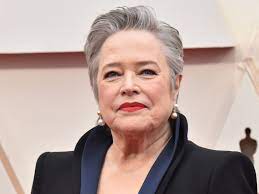
Many celebrities have suffered from the diagnosis of breast cancer, including Kathy Bates, a very well-known actress who starred in many award-winning films such as Waterboy with Adam Sandler and The Highwaymen staring Kevin Costner. Bates was diagnosed with breast cancer in 2012. This encouraged her to advise women to stay on top of their health.
Bates, having survived cancer twice, was very glad to share her input. “When you see what you’re afraid of, you can face it.” This quote holds a lot of power, and many people use that as motivation towards their fight against a sickness.
Bates realized at a young age that breast cancer runs in her family, so it was only a matter of time until it reached her.
Breast cancer can come with a very hefty cost of treatments. Although a doctor may find the cancer early on before it becomes a major problem, patients can face many surgeries along their journey to become cancer free such as radiation and chemotherapy tests.
The American Association for Cancer Research found that 47 percent of young women with breast cancer experience financial issues as a result of the cost of their treatments. The average cost of breast cancer treatments in 2023 without insurance could range from $10,000-$200,000.
Most cancer patients are insured and that covers almost the entire cost of treatments. Patients who are uninsured and aren’t eligible for Medicaid or Medicare can ask about charity care programs (fees are based on your income) at hospitals and clinics.
The financial burden is all the more reason to get mammograms and screenings for breast cancer as early as possible. The pink throughout October reminds people to do that.
The Saint Paul’s student council will continue to have initiatives that raise money to donate to this cause. Please join Saint Paul’s School in promoting that awareness and supporting and representing Breast Cancer patients in the month of October.
 The Paper Wolf