

Scientists have recently discovered the oldest black hole to date, a supermassive monster formed 470 million years after the “Big Bang.”
The findings, which were published in the journal Nature Astronomy, seem to confirm long-lasting theories that black holes existed near the dawn of the universe.
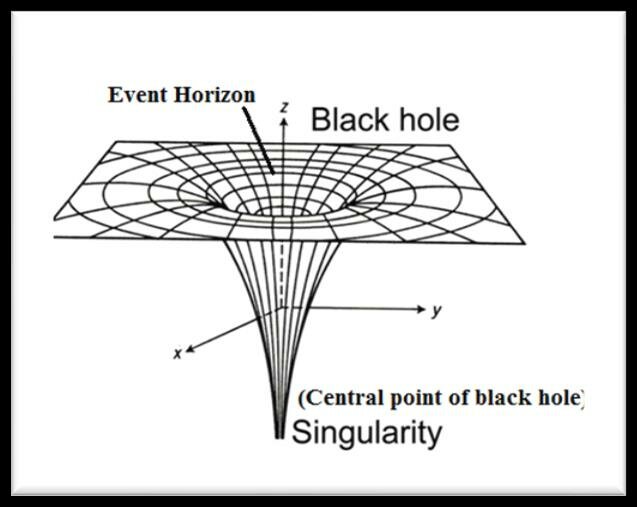
A black hole is an area in space where the gravitational pull is so strong that light can not escape it. Every black hole is made up of two parts: the Event Horizon and the Singularity. The Event Horizon is the surface of the black hole where gravity first becomes too strong for light to escape, while the Singularity is the center of the black hole and is defined as a point infinitely small and infinitely dense.
The reason this black hole is so unique is because it has an unprecedented combination of age and size.
Per the Smithsonian Magazine website, the black hole is around 13.3 billion years old, making it around 300 million years younger than our very own Milky Way galaxy. The black hole is so old that if the 13.7 billion-year history of our universe were condensed into a calendar year, the birth of this black hole would occur in the second week of January.
Despite its impressive age, the most astounding fact about this black hole is its size. It’s about 10 times larger than any black hole in the Milky Way galaxy. It is also believed to be anywhere from 10 to 100 million times larger than our sun.
According to the lead author of the Harvard-Smithsonian Center for Astrophysics, Akos Bogdan, the black hole is also believed to weigh anywhere between 10% to 100% the mass of all the stars in its home, the UHZ1 galaxy. That is overwhelmingly larger than any black hole in the Milky Way galaxy, which has a 0.1% mass of all the stars in it.
Co-author of the journal Nature Astronomy, Andy Goulding, emphasized the impressive size of the black hole based on when it was formed. “There are physical limits on how quickly black holes can grow when they are formed, but ones that are born massive have a head start. It’s like planting a sapling, which takes less time to grow into a full-sized tree than when you start with just a seed.”
When it comes to identifying black holes there are two types, stellar and supermassive. The mass of a stellar black hole is roughly 10 to 100 times of our sun. Meanwhile, the mass of a supermassive black hole, like the one recently discovered, can be millions to billions of times heavier.
Scientists have two leading theories about how the first supermassive black holes were formed. The first is that they were remnants of the explosions of single stars, beginning as stellar mass black holes and growing into supermassive ones over time. Another idea is that they were born from the collapse of large clouds of gas that created supermassive black holes immediately, measuring between 10 to 100 thousand times as massive as our sun from their beginnings.
Yale University’s Priyamvada Natarajan, who also took part in the research conducted in the journal Nature Astronomy, spoke about the new X-ray technology being used to gather information about black holes across the universe. “With X-rays, you’re actually capturing the gas that is being gravitationally pulled into the black hole, sped up and it starts glowing in the X-rays.”
By combining NASA’s Chandra X-ray Observatory and James Webb Space Telescope, scientists were able to locate the distant UHZ1. After two weeks of combining these two powerful sources, scientists found the presence of intense and superheated gas being emitted into its galaxy, which is a trademark feature of a supermassive black hole.
Scientists across the globe hope this new X-ray technology will lead them to future groundbreaking discoveries.
As for the black hole, researchers hope this discovery is the first puzzle piece to put together an explanation for the origins of all supermassive black holes.
 The Paper Wolf
Wonderful post ✍️
LikeLike