
AAU (Amateur Athletic Union) basketball has ruined the future of the next generation of the NBA.
In 2017, NBA Commissioner Adam Silver announced that the league’s leading orthopedic experts reported seeing an “increase in wear-and-tear issues in young players that they didn’t used to see until players were much older.” One cause of this increase could be a rise in players entering the league after playing AAU basketball.
AAU basketball gives high school athletes exposure and competition. However, its year-round schedule and constant physical demands are breaking down players’ bodies before they even get to the NBA, potentially shortening players’ careers and limiting the potential of the next generation of star players.
In the AAU system, players often compete in multiple tournaments in the Spring, Summer, Winter, and Fall, which can cause them to play three to four games a day. These dense schedules leave little to no time for players to recover, causing players to play through fatigue and potentially an unknown injury.
As a result, AAU players frequently suffer from overuse injuries such as tendonitis, stress fractures, and joint damage, which can follow them into the NBA.

Another concern is the growing trend of ESS (early sport specialization). When a player’s talent is recognized, their coaches often push them to focus exclusively on basketball and not play other sports. This usually leads to the player joining an AAU team, as it allows them to play year-round instead of only within the four-month high school season, and more playtime means more opportunities for players to stand out.
However, intensively playing one sport year-round comes with significant consequences. According to sportsmed.org, “ESS is linked to significantly higher rates of overuse injuries and an increased risk of severe injuries throughout an athlete’s career. Athletes who specialize early are more than twice as likely to experience injuries as their less specialized peers.”
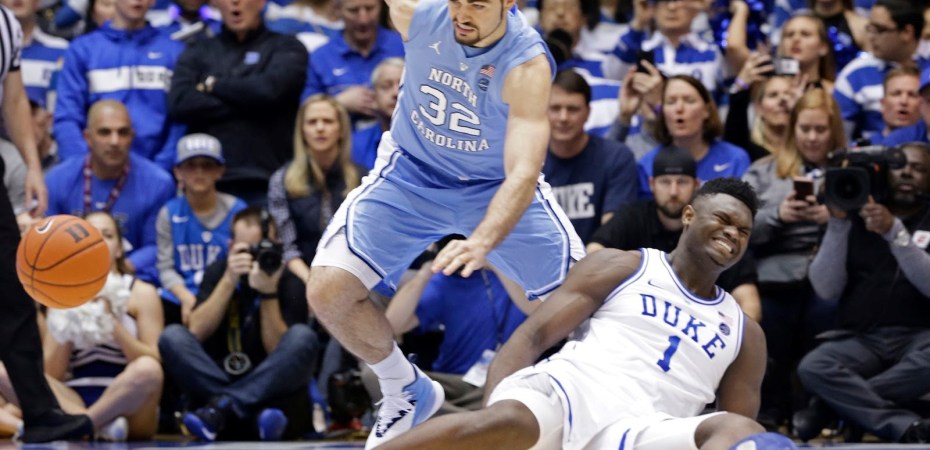
One of the most well-known examples of ESS hurting a player’s career is the case of New Orleans Pelicans star Williamson.

Williamson started playing AAU basketball at just five years old, and by the age of nine, he was waking up every day at 5 A.M. to train. Once he got to high school, Williamson became famous for his explosive athleticism and speed, with him even being dubbed “the next LeBron.”
However, ever since entering the league, Williamson has faced several knee and hamstring injuries, causing him to miss over half of his career games. Even the fans are becoming fed up with Williamson, with Saint Paul’s junior Evan Vanderbrook saying, “Zion is only 24 years old, but his body already can’t keep up with his athleticism. Him doing the same sort of actions, over and over again for hours a day, has finally taken its toll on his body.”
If even prodigal stars like Williamson are falling to the flaws of the AAU system, it is apparent that changes need to be made.
Another problem with AAU basketball is that it creates players who selfishly prioritize their stats over the success of their team.
AAU tournaments are designed to attract college scouts, which causes players to prioritize trying to stand out over their team’s winning. When everyone on the team tries to be the star, the team falls apart. Once they reach the NBA, these players are so used to being in the AAU system that they end up struggling to work together as a result.
Players such as Stephen Curry and Tim Duncan became successful because they always pushed their teammates forward instead of trying to carry their teams by themselves. However, players who grow up with the AAU system’s “star mentality” ultimately struggle to put their teammates first. In the long run, this ends up hurting both the players and their teams.
Additionally, the AAU system often neglects defensive training, treating defense as a second thought. Coaches don’t encourage players to develop their defense and rarely teach the basics of defense, like positioning and screening, which causes players to leave lanes wide open.
“It’s not like my coaches told me defense doesn’t matter. We worked on defense, but we worked on scoring and passing a lot more. A lot more,” said one anonymous Saint Paul’s basketball player.
This lack of development leaves players with bad defensive habits like ball-watching and over-committing when they enter the league, making them a liability on defense.
The lack of effort on defense isn’t just a problem in the AAU system, as the AAU system’s lack of defensive development is already being felt in the NBA, with teams scoring more than 130 points a game.
Fans have become bored watching the lazy defense of the modern NBA, with Saint Paul’s junior Jonny McGinnis observing, “Most players don’t even try on defense anymore. Players like Luka [Doncic] and Trae [Young] just leave the guy they’re supposed to be guarding wide-open. It’s like their main focus isn’t to try and stop the other team from scoring, but to try and score as much as possible.”

The AAU system is meant for players to develop into stars, but with the increased risks of injuries and flawed development, it’s become more and more evident that If players are genuinely thinking about their future, they should avoid the AAU system like the plague.
–
Featured Image Photo Credit: Zion Williamson Is Injured as No. 1 Duke Falls to North Carolina (Marc Tracy)
 The Paper Wolf