
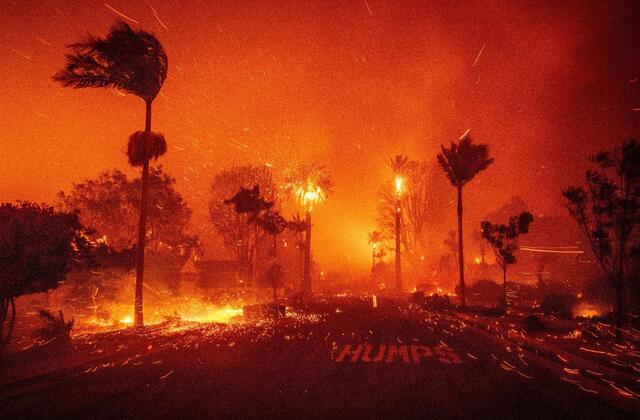
The wildfires raging across California have left a trail of devastation that only seems to worsen. With each passing day, the death toll rises, and once-thriving communities begin to resemble scenes from an apocalyptic movie. In places like Los Angeles, entire neighborhoods have been reduced to ash as fierce winds, dry conditions, and thick clouds of debris that once fueled the relentless flames still linger over the areas.
The state once appeared trapped in a never-ending cycle of destruction, with no end in sight, now stands in a state of destruction after the fires have died down.


The largest of these fires, the Palisades Fire, tore through the Santa Monica area after igniting in a brush-filled region near the Pacific Coast Highway. Firefighters, already stretched thin from battling multiple blazes, quickly realized that the ongoing drought and high winds had created a dangerously volatile environment.
As emergency teams worked around the clock to contain the flames, the steep, rocky terrain made their efforts even more difficult. While the cause remains under investigation, early reports suggest that human activity, such as a discarded cigarette, an unattended campfire, or even fireworks, may have contributed to the rapid spread of the fire.
Experts predicted that rainfall might bring relief, but in a region growing drier by the year, that hope remains uncertain.
Beyond response efforts, California also struggles to help communities rebuild. Nathan Luper expressed, “The biggest thing that hurts about the fires is the number of valuable items that families have lost that can not be replaced.” Bureaucratic delays and insurance disputes leave many wildfire victims in limbo, unable to access relief funds. In cities like Malibu and Paradise, residents who struggle to reconstruct their homes and have lower-income families often receive far less assistance than wealthier ones.
A report from the California Department of Insurance revealed that thousands of wildfire victims have faced challenges in processing claims, prolonging their financial and emotional suffering. Meanwhile, though necessary, new fire-resistant building regulations come with high costs that many cannot afford.

The financial strain extends far beyond individual families. California’s recovery funds often take months to reach those in need, and vulnerable populations, such as the elderly, disabled, and low-income residents, are frequently left behind.
Schools, particularly rural areas, face ongoing threats, with students forced to miss class due to evacuations and hazardous air quality. Without better preparation, an entire generation is growing up in the shadow of these disasters, their education and stability constantly disrupted.
For those who have never experienced a wildfire firsthand, it’s easy to see them as just another news headline. But for the families who lose everything, the scars are permanent. Insurance may rebuild houses, but it cannot replace the childhood toys, the family photo albums, or the sense of security that vanishes with the flames.
The smell of smoke lingers for weeks, a painful reminder of what was lost. Communities that once felt tight-knit are scattered, and many survivors never return, unable to face another fire season.
The wildfires have devastated countless communities, but many people believe that a lot of this destruction could have been prevented if the government had acted differently. In 2025, many of the fires that have torn through the state are a result of years of poor decisions made by leaders who failed to plan ahead. From bad land management to not giving enough resources to firefighters, the government has made California more vulnerable to these dangerous fires.
One of the biggest problems is the lack of proper forest management. For years, the state has ignored the need for controlled burns and clearing dry brush in forests. These are vital steps to stop wildfires from getting out of control. When the government doesn’t do these things, dry plants and brush build up and act as fuel for fires. While some worry about the environment and how controlled burns might affect it, the truth is that not taking action has made the problem much worse.
If the government had taken care of these areas properly, the fires could have been much smaller and easier to control. But the state didn’t act, and now entire towns are being destroyed.
Another major issue is that California’s firefighting agencies are underfunded. Saint Paul’s student Luke Murphy states, “By cutting the LAFD budget, Los Angeles city officials deprived the city of essential resources needed for preventing fires and stopping fires when they start.” The Fire departments do not have the resources they need to fight massive fires. They’re forced to use outdated equipment and sometimes don’t have enough firefighters to tackle the flames.
As more wildfires happen each year, the budget for firefighters continues to shrink. This is not only putting residents at risk but also endangering the lives of the brave first responders who are doing everything they can to save lives. If the government doesn’t give firefighters the support they need, people will continue to lose everything.
The housing crisis in California is another problem that makes these fires worse. As the population grows, more and more homes are being built in areas that are highly vulnerable to fires. These areas, known as the wildland-urban interface (WUI), are where flames spread the fastest.
Instead of ensuring these homes are safe, the government continues allowing people to build in these dangerous zones. Even worse, many of these homes aren’t built with fire-resistant materials, so when a fire does break out, they burn down much more quickly. It’s not just homes; it’s people’s lives being destroyed because the government isn’t doing enough to protect them.
The problem isn’t just about the past; it’s about how the government reacts to these fires now. Too often, the government acts only when it’s too late. Fire prevention programs get delayed or underfunded, leaving communities and firefighters unprepared when fires happen.
The government has failed to plan for the effects of climate change, which has made wildfires more dangerous and frequent. As temperatures rise and droughts become more severe, the current approach isn’t enough. If things keep going this way, the fires will keep getting worse, and people will continue to lose their homes and loved ones.
If California hopes to break free from this cycle, its leaders must take bold action. They must improve agency coordination, streamline rebuilding efforts, and prioritize preventative measures. Fire-resistant housing, better land management, and quicker response times are all crucial, but the problem will only worsen without a unified approach.
Wildfires are no longer an occasional disaster—they are a defining crisis of California’s future. The question is no longer if another fire will come but when. What the state does now will determine whether it continues to burn or finally begins to heal.
Feature Image Photo Credit: Ethan Swope
 The Paper Wolf