

Development in generative artificial intelligence (GenAI) is already causing significant job disruption, and its impact on employment will only intensify. Many artists question the ethics of GenAI and argue that its data training techniques are harmful to their careers.
In recent years, AI companies like OpenAI and Gemini have begun to incorporate more media creation features, making it very easy for users to generate media with simple prompts.
Unfortunately, what appears to be positive innovation has negative impacts.

Photo Credit: Jason Allen
GenAI includes a wide range of media creation genres. These previously ranged from stories, basic art pieces, and realistic photos, among others. However, social media is now displaying the production of increasingly realistic videos and the replication of specific art styles.
The rapid spread of this technology is accelerating job loss and instability in creative fields.
Surveys show that 26% of professional illustrators have already lost jobs to machines or GenAI. Additionally, due to GenAI, 37% of illustrators have experienced a loss of income from their work.
This is especially a problem when it comes to companies that use art. Many companies are now utilizing AI-generated art for their designs, logos, and other visual elements. Escalation and more implementation of this will lead to opportunities being lost for people interested in illustrative jobs.
Many beginning entrepreneurs seem to view GenAI as a simple solution to creating logos, shirt designs, and other similar things. Although this may seem like a redundant issue, one use of this should rather be seen as one less opportunity for a starving artist.
Plus, realistic GenAI images on social media are becoming increasingly difficult to distinguish from reality. Legal issues could potentially arise with real people’s appearances and voices being artificially made to say things that are damaging to one’s reputation or even incriminating.
Even more recently, the internet is seeing full-length songs being produced by GenAI. The websites to generate these songs can be fun to experiment with, but the music is making its way to streaming platforms. This can generate revenue for people who otherwise have no musical experience or talent.
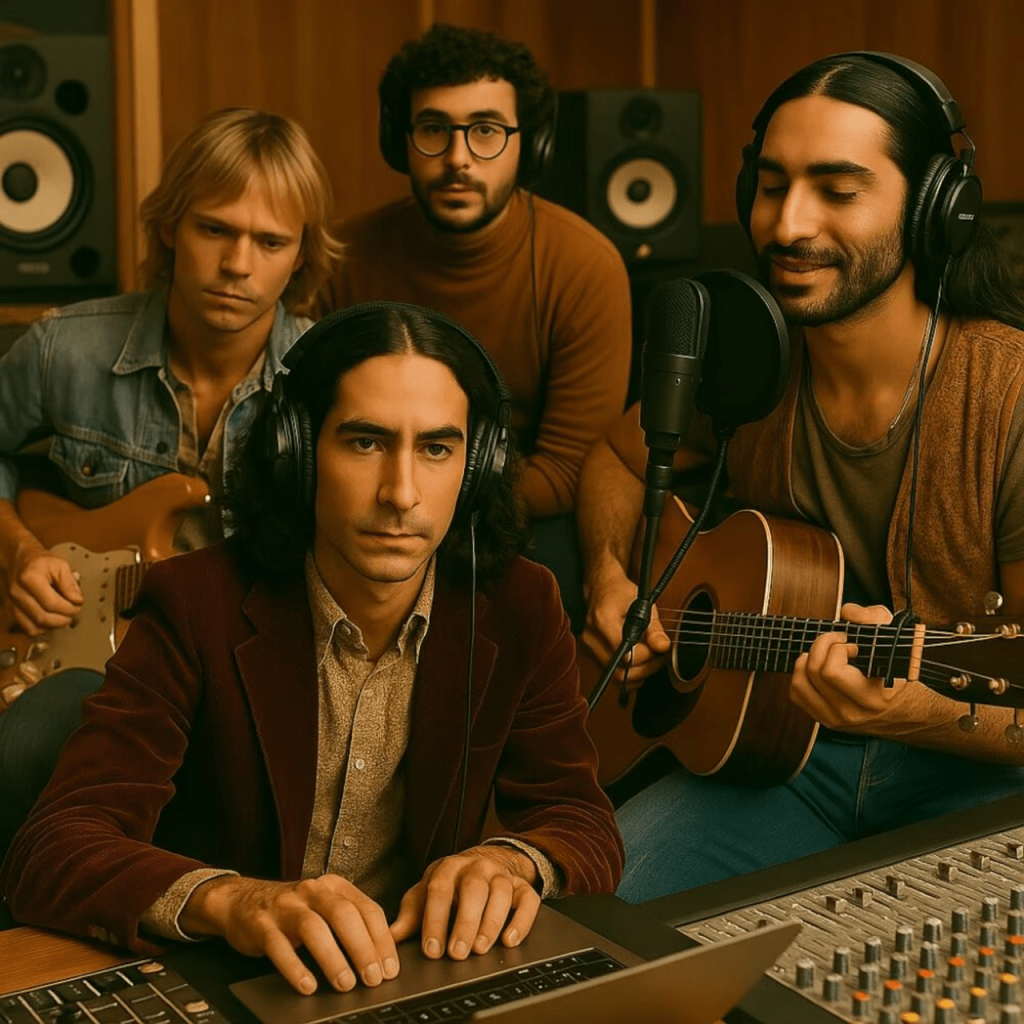
Photo Credit: The Velvet Sundown
The music industry has declined significantly in the past two decades (versus the flourishing industry of the ’90s and other past eras).
As a result, many talented young bands and solo artists find it difficult to become popular. This is true even among the rising “underground culture.”
AI “artists” making money off of simple prompts – instead of talent, musical intelligence, and passion – is concerningly representative of the growing GenAI era.
This growth can only get worse if nothing is done about it.
People with artistic and/or musical knowledge also have problems with the human intentions of art as a whole, including Saint Paul’s band director, Andrew Moran.
“Think about it: can you really ask an AI to do something like this?” Moran demonstrated a simple tune on a piano. “Will it ever have that real humanity to it? It doesn’t even know what it’s making, versus people, who have real emotions and can put that in their music,” stated Moran.
Of course, there are additional issues related to the actual development of this technology.
Many artists have expressed concern about the morality of data collection for training AI. “Data scraping” is one of these techniques.
Data scraping is the process of using programs to extract large amounts of online information (be it text, image data, etc.). This info is very often used to train GenAI models to increase their production quality. Often, a priority is to make the pictures more “lifelike” and indistinguishable from what a human artist can produce.
Anyone who publishes their art online is susceptible to having their pictures or words scraped and used for training. Many professional and hobby artists rely on publishing work online as a source of income. Scraping, in this context, can be argued to be a copyright infringement.
Even more effects have to do with the substantial water and energy demands of the data centers that power GenAI.
Data centers running AI models generate significant heat and rely heavily on water-based cooling systems to prevent overheating. A single large data center can use several million gallons of water daily. This consumption is similar to that of a small town.
Plus, the water consumption of data centers in water-scarce environments can deplete local aquifers and town supplies, creating unwanted competition of water-usage for local communities and agriculture.
Google’s data center water consumption increased by about 17% from 2022 to 2023. Microsoft saw a 22% increase over the same period. These numbers are primarily due to GenAI operations.
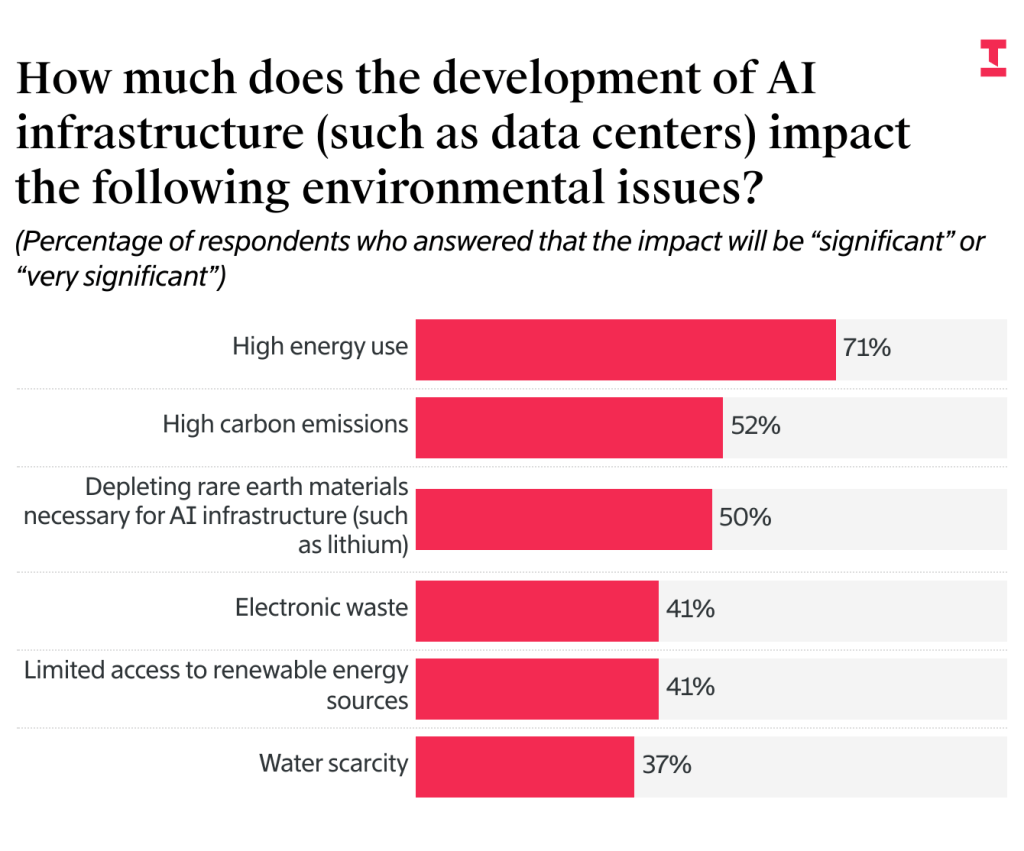
Photo Credit: The Information
Additionally, the high electricity costs of AI image generation lead to more energy consumption, which is already a significant environmental problem. This energy consumption leads to more greenhouse gas emissions, exacerbating climate change.
The hardware that powers AI, such as GPUs, requires the extraction of lots of rare earth minerals and other raw materials. This process is resource-intensive, depletes natural resources, and can lead to environmental degradation and pollution.
The earth is already facing enough pollution of our resources, and GenAI clearly only makes it worse.
Though, is there a way to lower the appeal of GenAI and maybe even slow the development of these models? Some artists have already implemented methods.
One of the most prominent programs used to “poison” art is Nightshade, developed by researchers at the University of Chicago. Poisoning is designed to corrupt AI models that use data scraping by injecting practically undetectable data into the pixels of images. It can cause models to confuse basic things, such as what is seen as a “cat” or “cake.”

Photo Credit: University of Chicago researchers
Ben Zhao, a professor at the University of Chicago and the creator of Nightshade, believes that it is important to establish boundaries between GenAI data scraping and artists trying to promote their art online. “So this can really give some incentives to both companies and artists just to work together on this thing, right? Rather than just a company taking everything from artists because they can,” stated Zhao in an interview with The Markup.
Legislation or regulation is urgently needed to protect creative jobs and prevent further erosion of opportunities for artists and musicians as GenAI blurs the line between authentic and synthetic creations.
The end result from inaction seems inevitable: creative artists will struggle to stay afloat amid GenAI competition, and our growing environmental problems will arise even more harshly.
Are we ready for a society devoid of creativity?
 The Paper Wolf