

The Billboard Hot 100 is over-inflated with underwhelming songs that have been played into the ground.
Since its debut in 1958, The Billboard Hot 100 has been a media site that ranks the top 100 most-streamed songs released at that time. In the past, the Hot 100 had been diverse, always changing to give new songs the spotlight.
However, as of recent years, most of the Hot 100 is what people call “radio music,” which could be defined as overplayed pop songs with shallow lyrics.
An example that exemplifies the Hot 100 is “A Bar Song (Tipsy)” by Shaboozey, which has been on the charts for 75 weeks, with 19 of those weeks at number 1. Although this song is so high on the charts, it is widely regarded as a bad and overplayed song by the public.
Saint Paul’s junior Jacob Seeger is one of many people who abhor the song. “Shaboozey is a disgrace to real country music and absolutely doesn’t deserve to be so high for so long on the top 100.”
This song was admittedly popular for about a week – two summers ago – so why is it still in the Hot 100?
It turns out the Hot 100 has always been broken. Until 1991, streams were not accurately measured, and data were self-reported by wholesalers. In 1973, they added radio streams, which back then was a good idea, but now the radio is known for playing the same songs for months on end. Additionally, in 2007, the chart began to weigh Spotify and, later, YouTube, further skewing the charts.
A statistic that represents this point is that there are only 42 different artists on the Hot 100 Billboard as of September 2025.
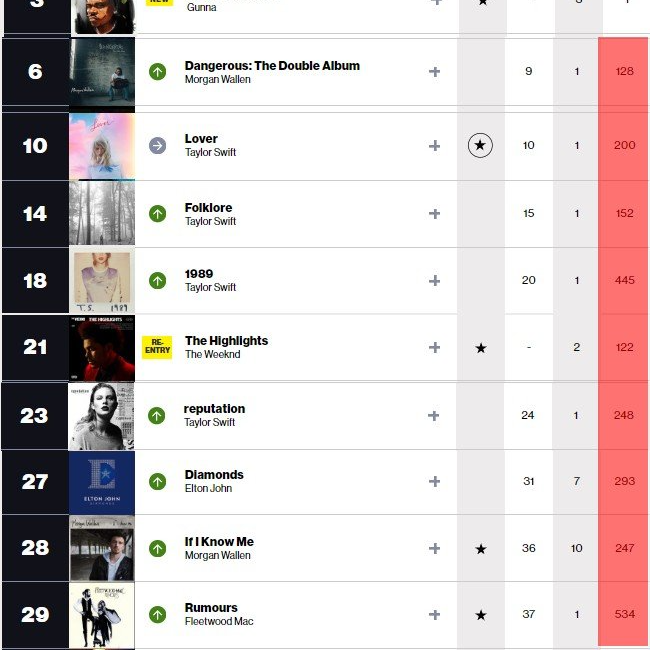
The biggest issue is that the Billboard doesn’t know what it wants to measure anymore. At first, it was sales, then it was radio play, then digital downloads, and now it’s streaming services and apps, and sometimes all of these at once, weighted differently week to week.
The Billboard keeps changing its formula, meaning artists are constantly playing a game without clear rules. It’s turning less into which songs people genuinely enjoy and love, and turning more into which ones are put into playlists, social media algorithms, or nonstop radio plays. In other words, the Hot 100 now seems bought.
Because of this, chart success today doesn’t have the same meaning and weight it once did. A number one song on the Billboard in the ’80s meant millions of people went out to physically purchase the record. A number one today just means the song got repeatedly streamed on the radio or was a TikTok trend for a few weeks.
The charts are still measuring something in music, but what that “something” is has become gradually harder to figure out.
It’s been turned into a popularity contest, and not a good one. An example of this is music from a movie, “KPop Demon Hunters.” Many people agree that the genre of K-pop isn’t good, but due to the movie’s success of being number 1 on Netflix, 8 of the movie’s songs have made it onto the Billboard, with 6 of them ranking above the 25th slot.
Artists are giving up on a passion for making high-quality music that truly reflects them, and instead are trying to churn out as many catchy, playable songs that will show up on the radio. This has gradually caused the music industry to not have a clear idea of who is considered best at the number 1 spot.
The issue with this is that artists are sacrificing the thought needed for music in exchange for catchy beats, quick, relatable, and singable lyrics. “There is no more soul in the music industry; every single song is trying to piggyback off of something else that has already been watered down,” said Saint Paul’s junior Blaise Hastings.

Many artist today don’t even write their own beats, and even lyrics. This takes the whole point of being a singer-songwriter out of the industry. Extremely popular artists like Drake, Beyoncé, and Kanye West don’t write their own lyrics, further taking the soul and personality out of their music. Sabrina Carpenter (who appears on the Top 100 a whopping 11 individual times) doesn’t even write her own beats.
“I think when artists have a talented producer make their beats and write their lyrics, they are essentially just a namesake for an anonymous musician that is legitimately talented,” stated Saint Paul’s music student and school pianist Jay Krieger.
With all of this in mind, the Billboard Hot 100 no longer represents the heart of music culture it once did.
What used to be a mirror image of what people were buying and listening to at the time has now turned into a confusing formula of streams, sales, and artificial algorithm pushes. Instead of rewarding genuine talent and fan support, the Billboard has become an artificial scoreboard of fake popularity, resulting in both artists and listeners getting the short end of the stick
The Billboard Hot 100 has become a shell of its former self, causing people to see the site as an inaccurate depiction and just another article to overlook.
 The Paper Wolf