

AI-generated images are changing the game for creation through shockingly realistic photos, which are worrying artists and putting them out of a job. This “AI-Slop,” as it is termed by those opposed to the practice, is seemingly a shortcut for individuals who are too lazy to create a drawing.
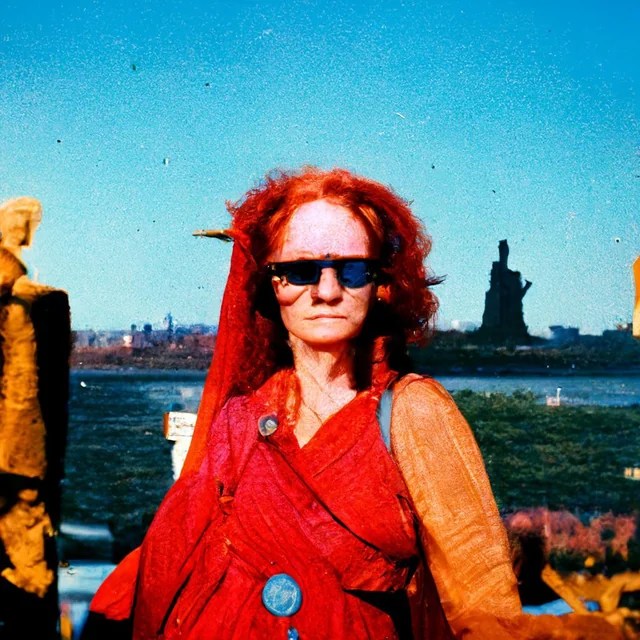
Rewinding the clock, the first popular use of AI image creation was with the now infamous DALL-E. Made in January 2021, the OpenAI-created website was designed to generate images through scanning the internet for relevant prompts. It blew up later in the year, mainly for its hilarious and insane attempt at matching users’ prompts. These pictures would be full of inconsistencies: hands with seven fingers, nonsensical objects, and an overall shiny glaze.
AI would continue to evolve, though.
Nowadays, AI has perfected its formula for replicating and creating life-like paintings and imagery. Most easily mistaken for actual pieces of art. This is incredibly worrying for art as a career. If AI is capable of creating some of the best pieces of artistry in seconds, there is no longer a need to pay for graphic designs or commissions. This act will have rippling effects on the job market, as it will leave many painters, animators, and designers out of the business.
Art Major Sasha Kilian-Searle, when asked about her opinion of AI images, said, “I think they don’t need to exist, because people who are generating these images are trying to solve a problem that doesn’t exist. I see it as very lazy. It’s the kind of AI that’s produced by companies to be lazy, and almost a way to take advantage of art.”
When asked about AI affecting her future job, “Do I believe that AI will take over? Not really. There is a very large percentage of the populous that disagrees. Everyone is so scared, and they forget that they are the ones to make the decision. If it were to take off, it would leave an impact. Many jobs are lost due to CEOs. I see ads on billboards that are clearly AI. It really comes down to a matter of cost. AI is meant to cut corners and will cut jobs like that.”
Yet the issues with AI images don’t just end with taking jobs.
AI plagues the internet with these practically realistic images or even videos and gifs in the thousands. This is a negative due to their ability to spread misinformation. Social media such as Instagram, TikTok, and Facebook are the main contenders for holding these photos.
Saint Paul’s junior, Chris Curtis, argues that his “For You Page” is filled with “AI-Slop”, most of which he can’t discern what’s real.
“AI has overrun my different social media platforms like TikTok. I’ll be scrolling on a video that I thought was normal, but then I checked the comment section for people to say it was AI. It really is impossible to know now,” said Curtis.

This especially applies to the older generation, who might not even be aware of how powerful AI has gotten and could fall for fake news. People older than 60 may believe that a generated piece is equal to one of Van Gogh’s.
Taking a few steps back, it’s important to take the other side of this argument: AI images give those who can’t physically create art a chance at developing something creative. Not everybody is artistically inclined to create their own pieces of passion; however, it’s hard to deny that it’s kind of a crutch.
Art takes time to learn, years to craft, and decades to master. That’s why art is so rewarding; it’s the appreciation that it took time. AI lacks that.
Furthermore, the AI art creation/generation has a controversy of its own. As mentioned, an image is made by scanning the web for similar images that match the description. Commonly, AI “steals” art from actual people, such as taking design elements or style. Despite what the AI overview says, AI generation doesn’t make a truly original image.
An example is the Studio Ghibli trend from March of this year. Users would get AI to “create” a Studio Ghibli adjacent art piece over a selfie. This flooded social media, and AI Ghibli images still find their way onto advertisements or profile pictures; however, this AI trend ironically went against everything the Studio Ghibli company stands for.

“I am utterly disgusted. I would never wish to incorporate this technology into my work at all. I strongly feel that this is an insult to life itself. I feel like we are nearing the end of times. We humans are losing faith in ourselves,” CEO of Studio Ghibli, Kiyofumi Nakajima, stated.
Nakajima is very passionate about art, so it’s very clear to see why he has such a strong opinion. Focusing on the phrase, “We humans are losing faith in ourselves,” really shows how AI is taking away one of our longest hobbies. As stated, AI goes against human creativity and passion. Yet, this isn’t even the worst thing AI causes, a problem that doesn’t involve human morals as much as the other.
AI also destroys our environment.
AI creation demands a staggering amount of energy. A single AI image being generated releases carbon dioxide equal to a car going about 21 feet. Generating 1,000 AI images is roughly equivalent to the amount of carbon dioxide emissions from a 4.1-mile trip.
If that number doesn’t seem ridiculous, consider a 2024 study that reported the creation of 12.590 billion generated images that year. Calculating the numbers, 12.590 billion generated images are equivalent to the amount of carbon dioxide released if a car were to travel to the moon 106 times and back. That is an astonishing amount of emissions being released into the atmosphere.
Getting back on track, it’s correct to say that AI images aren’t the right way to go. AI art goes against human passion and creativity and is really a cheat against what it means to work for something.
Saint Paul’s junior Jacob Seeger gives a similar verdict. “I can’t see a world where everything is AI. There would be no soul or purpose. No true reason to care if it had no effort,” said Seeger.
–
Featured Image Photo Credit: iStock by Getty Images
 The Paper Wolf