

Recently, memes have been ever-changing, ruling the internet, yet still falling off in just a few days after their peak. In 2025, they have become their own form of economy, becoming over-inflated, and causing different memes to rise and fall.
A meme is typically an image or video that expresses humor or cultural ideas, often evolving as it spreads rapidly across the internet.
From absurd nonsensical videos to odd social commentary, memes have become a way that people communicate across the internet. In today’s age, apps like Instagram and TikTok have become a sort of network of connecting videos, with each meme referencing the last.
One of the biggest memes of today, “6-7,” has been prominent since February 2025.
Many people recognize the meme from children shouting the phrase, but not many, including those shouting, know where it comes from.
The entire meme originates from the song “Doot doot” by Skrilla. Released in December 2024, the song wasn’t a hit, not making it to the charts. In the song, Skrilla repeatedly says the viral phrase “6-7” referring to 67th Street in Chicago.
The meme started its framework on a podcast about basketball, when referring to LaMelo Ball, the host says, “He literally moves like somebody that’s 6’1″, 6’2”, except he’s 6’7.”
This podcast quote got clipped and put into a Lamelo Ball highlight edit using the song by Skrilla. Because of this, basketball TikTokers made the song a sort of “anthem” for Ball. After the edit, the song “Doot doot” quickly became rooted in basketball TikTok.

Because of this, a clip popped up on TikTok of a teen on the side of an AAU basketball game, many refer to as “Mason.” The clip shows the game, pans to the crowd, Mason goes up to the camera and shouts “6-7” loudly, shaking his hands up and down, a part of the meme.
Many people across TikTok and Instagram found this “corny” or “cringy,” leading to the phrase 6-7 becoming a meme to terrorize parents and teachers today.
Saint Paul’s junior Jacob Seeger is one of many people who are tired of the meme. “I think that at a certain point, 6-7 was funny, and I even used to do the hand gesture when someone would say it, but I think that it’s been entirely overused and was funny for maybe a month,” Seeger said, only after uncontrollably screaming the phrase, shaking his hands up and down.
On top of this, 2025 has brought many other memes that are simply nonsense phrases.
An example of this insanity is the viral “mustard” meme, originating from a Kendrick Lamar song released in November 2024; all of his songs were an immediate hit due to the preceding “Drake beef.”
Still, one song that stood out among the rest was “TV Off,” in which Kendrick Lamar screams the word “mustard!” shouting out the producer. Yet, Many people found the part of the song unnecessary and unfitting.
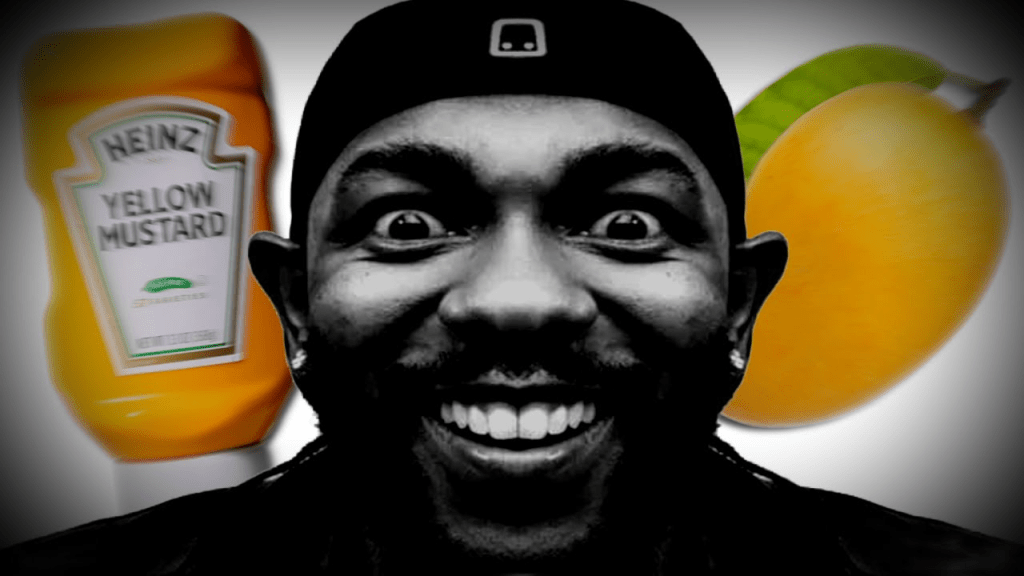
Due to this, many people across social media started screaming the phrase in unfitting situations, and later even brands hopped on the trend, such as McDonald’s, making an advertisement using the song and text saying “Honey MUSTARDDD…”
Although this meme was popular in early 2025, it experienced a later resurgence, being paired with the “Mango” meme, which originated from a video by El Salvadorian TikToker Alfredo Larin. In the video, he pours a bucket of mangos over his head and repeatedly says “Mango! Mango! Mango!”
This TikTok would be clipped and remixed into a phonk song that, generally, people found abhorrent, to the point that many found humor in it.
TikTok would have many other kinds of memes like these, including people yelling phrases like “chicken jockey,” a popular meme from the Minecraft movie released in April 2025.
Many people refer to memes of 2025 as “brainrot,” which could be defined as low-quality slang terms or memes that are unchallenging and mass-produced, resulting in excessive consumption of content.
In early 2025, a subgenre of brainrot culture popped up, known as “Italian brainrot.” Typically, in these types of videos, an AI image of a wild animal mixed with an inanimate object like food, appliances, and weapons would be displayed on the screen, followed by strange music and an Italian-sounding AI voice saying the creature’s name.

Photo credit: Zburger401 on TikTok
The different creatures would have basic Latin-European sounding names like “Tralalero Tralala,” “Bombardiro Crocodilo,” and “Chimpanzini Bananini,” to name a few.
Italian brainrot’s humor comes from its absurdity, humorous visuals, and nonsensical narrative.
Though the meme had its fifteen minutes of fame, it quickly became stale for more mature audiences, leaving the meme to be overused by the accounts that once used it as a claim to fame.
Due to these accounts, Italian brainrot quickly became associated with children, making the meme die out around March-April of 2025
TikTok would soon evolve around August of 2025, moving from less “brainrot” focused and moving to what some know as “schizoposting.”
When asked to define “schizoposting,” Saint Paul’s junior Blaize Hastings said, “completely meaningless to anybody except those who have an extremely high level of understanding of current meme culture, to the point that anyone who doesn’t know would see the post as complete gibberish.
Schizoposts would include a mashup of different memes that would make sense, but would be clipped together in a completely incoherent format.
These types of posts would commonly use other viral memes of 2025, like “Steven here,” “a barbershop haircut that cost a quarter,” and “Adrian, explain our friend group.”
Social media is rapidly evolving and moving through different memes, and even faster now with the use of AI and the fact that phones are so prevalent today. With the constant changes, people have become very uncontent with memes recently. Many TikTok users are stating that there are “no good memes,” and many people are calling for a “great meme reset” on December 31, 2025.
Right on cue, the latest viral meme, “Wabi sabi,” has recently taken shape. Now, we’ll have to see where this one goes.
Looking at things now, meme culture on social media has become both unstoppable and unpredictable. Moments that start as a random throwaway post or just a funny clip can shape how millions of social media users communicate and post, yet trends can fall just as fast as they rise, making the algorithm unpredictable and hard to track.
 The Paper Wolf