
March Madness, the NCAA’s national basketball tournament, is the greatest tournament in American sports, but what makes it so great?
The first thing fans look for is the unpredictability and absolute chaos that ensues every year.
“Like they always say, anything can happen in March,” said Saint Paul’s senior and college basketball fanatic Avery Estrade.
This unpredictability stems from the sheer volume of games played in a single-elimination format. For example, it takes only one hot shooting night from an underdog mid-major team and a few mistakes from the powerhouse favorite team for an instant elimination from the tournament.
:max_bytes(150000):strip_icc():focal(749x0:751x2)/fairleigh-dickinsons-basketball-2023031738-244cdfac9a1342e1be495bb574d462d7.jpg)
Photo Credit: Tyler Schank/NCAA
There are, on average, between 8.5 and 12.4 upsets per year in the Men’s NCAA tournament.
In recent years, however, the tournament has become even more chaotic and unpredictable. Over the last 36 years, that number has increased, with 77% of tournaments featuring more than 10 upsets. Furthermore, since 2018, there have been two 16-seeds to advance beyond the first round. Up until 2018, 16-seeds were 0-135 against 1-seeds.
Certain seed matchups are especially known for producing chaos. For example, 12-seeds beating 5-seeds is one of the most famous March Madness trends. At least one 12-over-5 upset has happened in 31 of the last 38 tournaments, making it one of the most common bracket surprises.
These upsets or “bracket busters” make the tournament exhilarating for fans, regardless of whether they’re college basketball fans.

Photo Credit: Augusta Chronicle
Another reason the tournament is so captivating is the bracket culture. Millions of fans, many of whom did not watch a minute of college basketball in the regular season, flock to beat the 1-in-9.2 quintillion odds and make the perfect bracket.
“I don’t know a lot about basketball besides dribbling and dunking, but I do make a March Madness bracket. Because I know so little, I usually just ask ChatGPT to make me a bracket and let it ride,” Saint Paul’s senior Aiden Underwood said.
Beyond just beating the odds and earning bragging rights over friends, ESPN offers over $100,000 in prizes for the contestant with the best bracket, prompting participants to make outlandish predictions that set them apart from the rest.
Saint Paul’s senior Lane Hamaker loves picking Cinderellas to go far in the tournament. “Seeing small mid-major teams defy the odds and go to war in the tournament’s later stages creates incredible, movie-worthy stories. That’s what makes this tournament so special,” Hamaker said.
A few lower-seeded teams in this tournament that could be poised for the next legendary Cinderella run are 10-seeded Santa Clara and 11-seeded USF.


Santa Clara is sneaky dangerous for power teams because of their size and athleticism. The Broncos rank 33rd in the country, on average, as a small mid-major school! They have an amazing turnover margin because of their size on defense, along with 4 players who can handle the ball at a very high level. Although they have a tough first-round draw against 7-seeded Kentucky, which can match their physicality and play a similar style, if they advance beyond that, they will be dangerous.
USF might be the most dangerous mid-major in the entire country; they just play the game effectively and efficiently. The Bulls lead the country in 2nd-chance points at 17.3 per game and rank 14th in pace. Furthermore, they average 29 3-point attempts per game, ranking 22nd in the country. Not only are the Bulls dangerous for their first-round matchup with Louisville, but they have real Sweet Sixteen or even Elite Eight potential.
Some Cinderella teams of the past have become so infamous that they’re better known than the team that won the tournament. For example, in 2022, the Saint Peter’s Peacocks, led by electrifying guard Doug Edert, became the first and only 15-seed ever to advance to the Elite Eight.
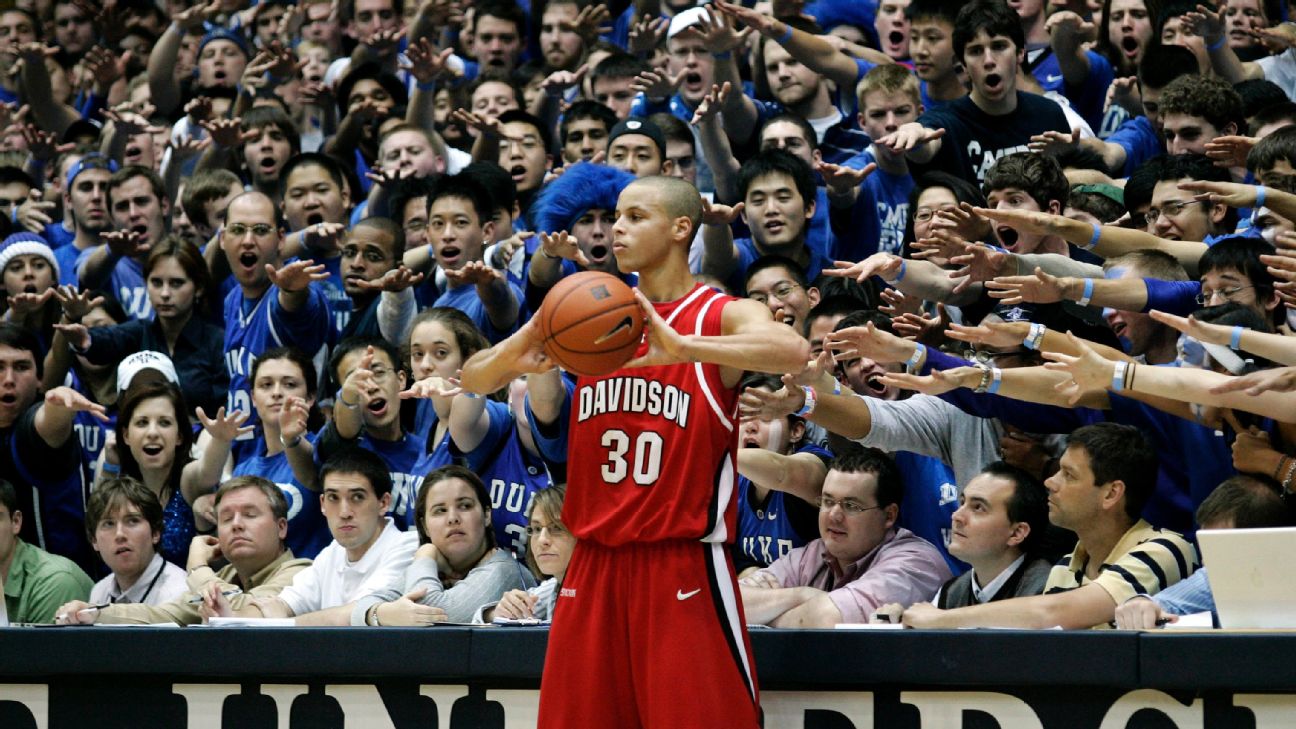
Another infamous Cinderella team was the 2008 Davidson Wildcats. The Wildcats were led by future NBA legend and back-to-back MVP Steph Curry. That year, the wildcats started the year with a 4-6 record before rattling off 22 straight wins and becoming Southern Conference champions.
Curry started the tournament with a 40-point bomb, stunning the 7-seed Gonzaga before dismantling 2-seed Georgetown and 3-seed Wisconsin. Their run came to an end with a one-point loss to Kansas in the Elite Eight, with the Jayhawks holding Curry to just 25 points. However, despite the loss, we saw a glimpse of what to expect from the 7th overall pick, Steph Curry, in the NBA.
Seeing future stars like the aforementioned Curry perform on the biggest stage before they reach the NBA exhilarates Saint Paul’s senior Christian Spallita. “It’s really exciting to see young players like this shine before they gain any national notoriety. It gives you a chance to follow their story and root for their success,” Spallita said.
NBA Stars like Dwyane Wade, Carmelo Anthony, Cooper Flagg, and Zion Williamson all made themselves household names with their performances in the tournament.
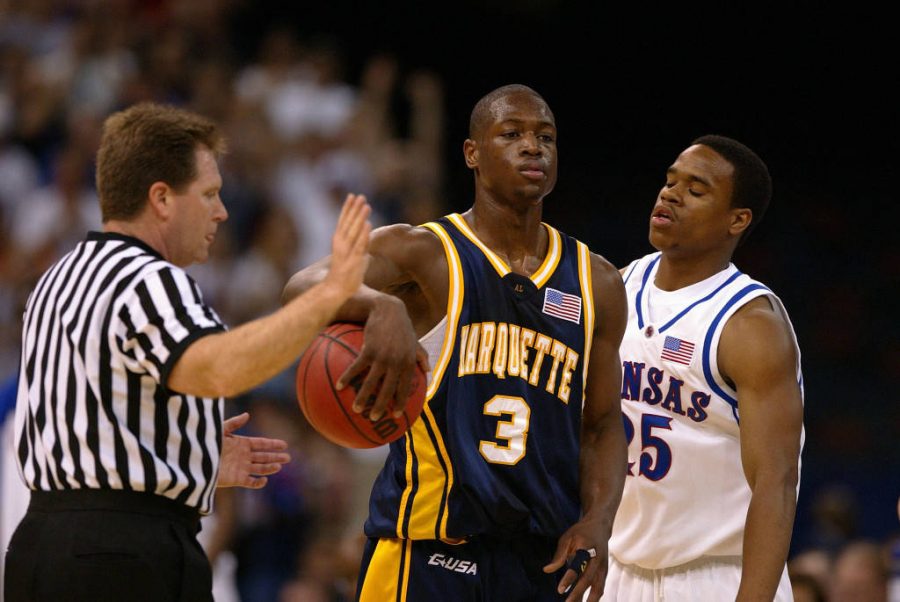
In 2003, Wade and Anthony took their programs to the Final Four in the Louisiana Superdome in New Orleans. Wade took his Marquette Golden Eagles on a historic run, averaging 26.2 points per game (PPG), 7.2 rebounds per game (RPG), 6.6 assists per game (APG), and 3.0 steals per game (SPG), with a capstone game in the Elite Eight vs Kentucky where he recorded a 29-point triple-double.
Anthony averaged similar stats but, unlike Wade, went on to win the tournament for the Syracuse Orange. Anthony was named the 2003 NCAA Tournament Most Outstanding Player and went on to be selected third overall by the Denver Nuggets. Wade was selected fifth overall in the 2003 NBA Draft by the Miami Heat, where he led the team to three NBA Championships.

Although the two Blue Devils, Flagg and Williamson, came in as blue-chip prospects, their performances in the tournament solidified them as the number one pick in their respective drafts (Flagg in 2025, Williamson in 2019). On a run to the Final Four, Flagg averaged 21 PPG, 7.6 RPG, and 5 APG. Although Duke eventually fell short against Houston, Flagg proved he could compete against top talent. Williamson had a similar tournament performance, averaging 26 PPG, 8.5 RPG, and 1.5 blocks per game (BPG), in a run to the Elite Eight before a loss to Michigan State.
This year, a few young players who could have this superstar breakout during the big dance are BYU’s AJ Dybantsa, Kansas’s Darryn Peterson, and Arkansas’s Darius Acuff.
Dybantsa is a 6’9 210 lb forward that can do anything on the court for the 6-seeded Cougars. Dybantsa leads the country in PPG by a decent margin while averaging just over 7 RPG and 4 APG, with good efficiency. Since his co-star Richie Saunders went out with an injury, Dybantsa’s PPG has risen to a staggering 27. Although maybe not poised for a deep run in the tournament due to his team’s injury struggles, Dybantsa is surely poised to show NBA General Managers and fans alike his scoring arsenal and how he can contribute to an NBA roster.

Photo Credit: Imagn Images
Peterson is on the other side of the coin as Dybantsa, as he has been the one struggling with injury this season. Despite this, Peterson has been projected as the number one overall pick in the 2026 NBA Draft for most of the college basketball season. Peterson is a 6’6 205 lb guard with a lethal jumpshot, a good handle, and a lot of burst- although much of that hasn’t been displayed due to injury.
Peterson’s Jayhawks are a 4-seed in the loaded East region, by far the toughest region in the tournament, with the overall favorite Duke, underseeded giants like St. John’s, and sneaky high seeds like Ohio State and UCLA that have been scorching hot recently. There’s a lot on the line for Peterson with this tournament, and it will be interesting to see if he will step up to the challenge and be a March legend or just another one-and-done.
Arkansas’s Acuff is the final freshman phenom poised to solidify himself as a March legend. Acuff and the Razorbacks are coming off a dominant SEC Tournament win, where Acuff won tournament MVP, averaging just over 30 PPG. The Razorbacks are a 4-seed in the West region and have a very realistic shot of making it deep in the playoffs if Acuff keeps up with this level of production.
In the end, it’s the chaos, the Cinderella stories, and the birth of future stars that make March Madness not just a tournament, but the most thrilling spectacle in American sports.
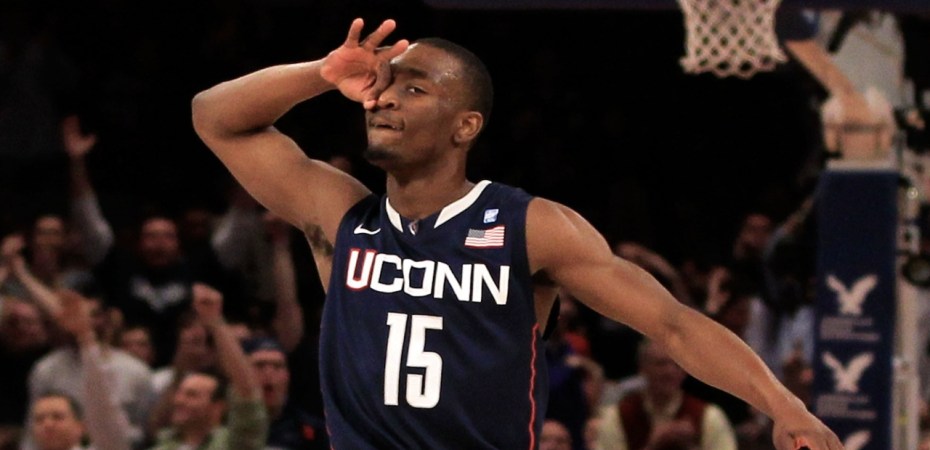
Featured Image: March Madness legend “Cardiac” Kemba Walker Photo Credit: Chris Trotman/Getty Images
 The Paper Wolf