

The glow of a phone screen has become a casino floor for teenagers, and for many, the bet is determining their future. With online gambling platforms just a few taps away, a growing number of teens are falling into addiction, draining savings, racking up hidden debts, and watching their school, relationships, and mental health unravel before adulthood even begins.
The most impactful thing that is leading teens down a bad path is the early exposure to online gambling through social media apps and games.
It starts with companies like Rainbet, which find creators worldwide and pay them to promote their app and show how easy it is to make money. Many teens cannot go a day without seeing one of these ads, and they can really make people wonder if it is really this easy to make money. Research shows that this constant exposure increases curiosity about gambling, therefore raising the likelihood of trying to gamble earlier.
Saint Paul’s Junior Eli Underwood is one of many who agree that these online companies are putting way too many ads on social media.
“I scroll through my phone and always see creators advertising online gambling apps. It makes you consider falling into the trap of online gambling, because if people I admire on social media do it, why shouldn’t I?” Underwood said.

Many young teens find some of these creators to be their role models and follow in their footsteps, only to lose money. What they don’t see is that these influencers are being paid to share this content and are making money by promoting gambling, so while they’re playing risk-free, the teens are not.
Roughly 160 million teens under 18 are on Instagram, which means there are 160 million opportunities for these online companies to get new users and make money. The social media addiction doesn’t make teens automatically want to gamble, but it does make them more vulnerable to the content that can lead them.
This makes gambling seem like an acceptable and even desirable activity for all of these teens. Simple games like rock, paper, scissors, mines, and slots can be bet on by young children.
Another form of gambling that has taken off is sports betting. According to the American Gaming Association, sports betting rose 23.6 percent in 2024, and Americans placed $147.7 billion in sports bets in just one year.
Betting on sports differs from other forms of gambling because it involves real-world events and information that bettors can analyze. Therefore, it makes it seem as if bettors can beat the system and win by using a strategy.
For example, casinos and online betting apps offer games like slots and roulette. All of these games are based entirely on pure chance. The wheel spin is random in roulette, and the slots are based on just pure luck and random number generators.
Sports betting is the complete opposite. It puts the idea in people’s heads that all you need is a strong knowledge of sports, and you’ll win money.
Strategy plays a big part in sports. Statistical analysis informs many people’s choices. Team performance metrics, match-ups, and historical trends can help you give a more educated guess, which gives you more confidence in every bet you place.
It would seem that sports betting is not dangerous. However, the sports book always factors all of that analysis and more into each bet, so it always has an edge. Sports books build a margin into the odds called the “juice.” You must win more than 52-55% of bets just to break even.
Just remember that if it were easy, everyone would do it, and these companies would not be worth billions of dollars if they were losing money. Their goal is to win, and they will do anything to win, even if it is not fair.
Another problem with sports gambling is that it’s extremely addictive, especially for young teens.
The brain doesn’t fully develop until you are in your mid-20s and early 30s. This means teens are making life-changing decisions and aren’t even fully mature yet.

The prefrontal cortex, which supports judgment and impulse control, is not even close to fully developed in teenagers, and the reward system, or dopamine system, remains highly active. This means they are more likely to react when they get rewards and experience a higher level of excitement than others do due to the dopamine boost.
Over time, the brain becomes dull due to a lack of excitement. People are pushed to increase their bets just to feel that same level of excitement.
Because their decision-making capacities have not fully matured, young teens don’t recognize when the “fun” turns into life-impacting financial and emotional damage. When you mix these two together, you get a group of people who love to win but are bound to lose due to greed and the risks they take.
So why do these teens keep doing it?
The big wins, exciting reactions, flashy lifestyles, and the “get rich quick” narrative make it seem not only harmless but also enjoyable. Unfortunately, many of these young teens see it as entertainment, a flex, and a shortcut to success, which is just not true.
Saint Paul’s pre-freshman Liam Lebert strongly agrees that the whole narrative about gambling is very wrong.
“Many perceive gambling as a shortcut to wealth. However, it’s just a risk where the odds are completely designed against you. Many small wins might accumulate over time, but the biggest win is still just not gambling at all,” Lebert said.
All of these things can eventually lead to mental health impacts. Depression has already risen in minors ages 12-17, and one in five minors experiences depression in major episodes. While many are still trying to form their identity, depression is the last thing any teen needs.
Depression can interfere with processes that can impact every part of a teen’s life, like school performance, relationships, and physical health. All of these struggles can lower self-esteem and make it difficult for them to see positive possibilities for their future. These negative effects can all stem from a single click on an online website.
Lazy habits slowly form, and the want of jobs decreases. The brain’s reward system processes only how easy it is to win, fostering a preference for instant gratification over long-term effort. Forming these habits makes “work” seem like a slow, inefficient way to make money.
Losing a lot of money does not even deter many, because websites set you up to lose it. The “near miss” effect is when websites purposefully make it so that you almost win and barely lose, just to give you hope of winning the next time. The player becomes more motivated to spend because of the previous effort. Your ventral striatum (a part of your brain) is stimulated when this happens and is responsible for the feeling you get when close to a win.
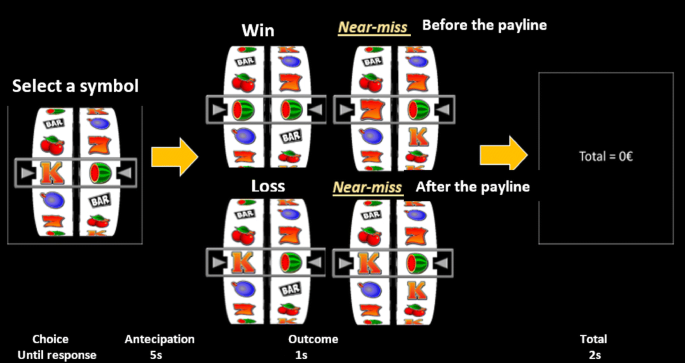
Photo Credit: Springer.com
The win response can make a game of luck, like slots, and the cross-the-road game can get confused with games that require more skill and strategy, like blackjack or poker. Tricking yourself becomes even easier because you think you have control over whether you can win or not.
For example, a basketball player might shoot a deep three and barely miss, leading them to think they will make the next one. In the end, they will probably still shoot under 50%, but the close shot gave them the “near miss” effect, causing them to keep shooting with confidence.
Everyone would agree that gambling wouldn’t be harmful if it weren’t for the financial harm and debt it puts people in, let alone young teens. The money being placed online feels like it’s not real money because it’s on a screen rather than in tangible form. Teens often lose sight of how much they gambled away.
According to Gambling Zone, 10-15% of players win in the short term, and less than 1% win in the long term. Around three percent of gamblers with addiction and problems have more than 300,000$ in debt.
If young teens build bad habits, they can just be another statistic, ruining their lives. It’s like handing a teenager a credit card with no limit and no explanation of interest. Everything seems fine while you’re spending it, but when the bill arrives, all the problems come to light.
Another problem with these online websites is the lack of verification needed to place bets. Many sites require users to be 18+ or 21+, depending on where you live. However, some sites only verify age after your deposits or withdrawals, meaning a teen could create an account using a fake birthdate first.
Parents can buy into this problem as well. Using parents’ IDs is the most common way these teens are getting into online gambling. These websites don’t have an efficient way to determine if the user is the actual parent or an underage minor using their parents’ ID.
So what’s the solution?
Although there are ways to make it more complicated to create an account, like a live face matching or a random liveness challenge, which would require you to do a face scan at any point while on the website, the real solution is for parents or guardians to try to stop letting minors use their IDs for making these accounts.
Online gambling is just another thing in life that teens and all people need to avoid. Allowing teens to gamble is like handing them car keys to a car before they learn how to drive.
The risk of crashing is inevitable.
Featured image photo credit: Qooapp
 The Paper Wolf