


Saint Paul’s student-athletes have the dual responsibility of balancing academics and athletics. Student-athletes who play sports such as football, lacrosse, rugby, and many more frequently practice and lift weights on and off campus, whether it’s in season or the offseason.
However, lifting weights and practicing are not the only things players must do to be student-athletes. Other aspects, such as diets, academics, and mental health, also come into play.
Saint Paul’s has a history of being dominant in sports, but many people do not consider all of the work the players do off the field and the time-consuming challenge it takes to excel both on the field and in the classroom.
“In addition to practicing almost daily, I work out three times a week,” Saint Paul’s junior Dylan Post states. Post has begun to prioritize his diet, too:
“My diet mostly consists of protein, carbs, and a lot of water. The new school lunch provides healthier options than before, and the wraps are a great option when I want something quick and healthy. Recently, I have stopped drinking energy drinks because they tend to dehydrate you. Instead, I have started to drink a lot of liquid IV, Gatorade, and Powerade. Outside of football, my coaches expect healthy diets, acceptable sleeping habits, and frequent exercise.”
At the beginning of the school year, football players had to wake up around 4:30 a.m. to show up for 5:15 a.m. practice. This allowed players to beat the brutal Louisiana heat while freeing up their afternoons to work out or study as needed.
There is an active sport on campus at all times throughout the year. Even in the summer, there are football workouts and practices, varsity baseball workouts, 7’s rugby games, and many more sports activities.
During the school year, many sports practice after school. For instance, cross country, football, and lacrosse all begin right after school. Then, some sports, such as rugby, practice in the evening around 5:30. This requires many students to remain on campus from 3:00 p.m. dismissal until practice ends, which can be as late as 7:00 p.m.

Bryce Loisel is a Saint Paul’s senior who plays rugby. He claims, “I work out four times a week, 3 with the rugby team and one on my own. I eat whatever is at the house or readily available… The coaches’ standards for the team are to be there early, give 100 percent at practice, stay in tip-top condition outside of rugby, and heavily enforce communication. I try to get 8 hours of sleep a night…”
All of this work can make it difficult to find time for studying and homework. Saint Paul’s junior Cole Walmsley states, “As a varsity lacrosse player, it can be very time-consuming, and practices are physically demanding. Practice starts at 3:30 p.m. and goes until 5:00 p.m. When I get home, I eat and then do homework or study for about 2 hours on average, then play an hour of video games to relax.”
While student-athletes have less time to focus on their studies, academics are still a big deal. “One thing I’ll always remember being taught at Saint Paul’s is that in the phrase student-athlete, the student comes first. Accordingly, that’s where your first priority should be,” stated Saint Paul’s English teacher, Mr. Guarisco (’08).
Another factor most people do not contemplate when it comes to being a student-athlete is a support network for the players. Success as a student-athlete is often a team effort. Building a strong support network from family, friends, and coaches is very important.
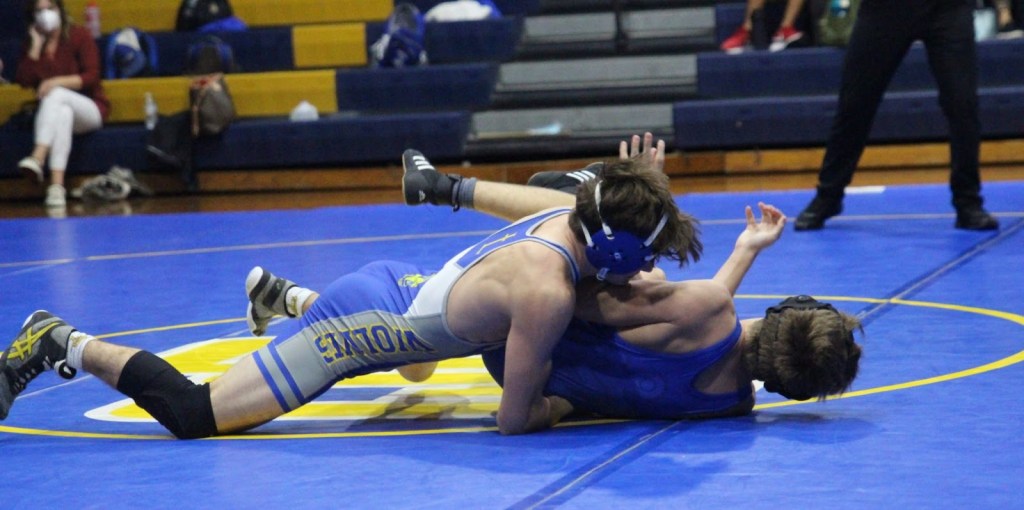
This is shown as Saint Paul’s junior Jake Gaudet states, “Wrestling is very mental. Having supportive coaches is a heavy factor. They are there to pick you back up after losses and help you improve a little more each day. My dad tries to make every meet and is always cheering me on from the side. These factors are what help keep me motivated while on the mat.”
Technology and social media management are prominent for student-athletes in today’s society as well. Managing their online presence and using technology can impact reputation and focus. According to Saint Paul’s junior Luca Rodas, “As a student-athlete, having a social life is important, but how I manage it is even more important. With every post I make or every chat I send, I make sure it is something that cannot affect my social presence or reputation.”
Being a student-athlete is all about juggling a lot of responsibilities. Balancing schoolwork with sports requires hard work, good time management, and determination. However, this delicate balance also helps with learning valuable life skills like discipline, perseverance, and time management.
 The Paper Wolf