

Originally developed as a tool to combat terrorism, Palantir is now surveilling every aspect of your life.
Palantir was established in 2003 by Peter Thiel, the founder of PayPal, and Jewish-American intellectual Alex Karp, following the tragedy of 9/11. The company aimed to incorporate elements of PayPal’s fraud detection technology for national security purposes.
Unfortunately, over the past 20 years, Palantir has almost become a symbol of dystopian surveillance. Unknown to the general public, Palantir has been providing government agencies like ICE and the CIA with large amounts of data to help them spy on the general public and make arrests accordingly.
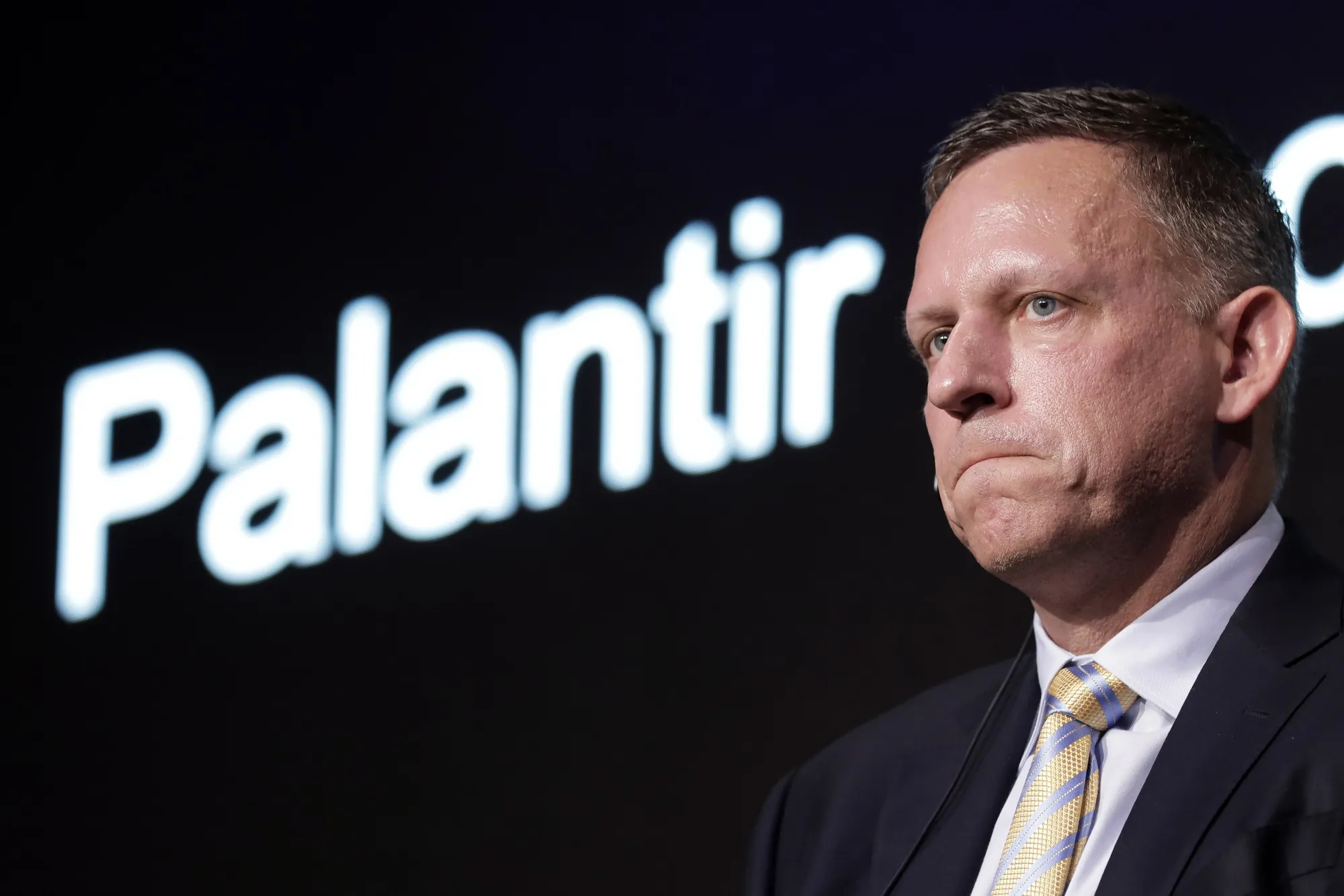
“It’s a really powerful tool,” says one former anonymous Palantir employee. “And when it’s in the wrong hands, it can be really dangerous. And I think people should be really scared about it.”
Palantir works by integrating data from multiple sources, including motorpolice reports, license plate readers, vehicle files, visa and travel histories, and social media data (such as location history and private messages obtained via subpoena), to assist government agencies.

For example, in Germany, Gotham enabled “contact network analysis,” flagging not just suspects but people merely associated with suspects via phone records and social media connections.
Imagine your local police following your every move because you happened to be friends with someone who once committed a crime.
Fortunately, this was deemed unconstitutional by the German Constitutional Court for overreaching into privacy rights and was struck down in 2023.
Furthermore, it utilizes artificial intelligence (AI) and machine learning (ML) to process this data at a massive scale, enabling analysts to identify patterns, map social networks, and review an individual’s history. However, these uses overextend into individual privacy rights, are unreliable, and often target minority populations.
According to a 2019 study by New York University Law Review, these predictive policing systems use “dirty data,” including arrests, stops, and reports influenced by racial bias, discrimination, or civil-rights violations. Since minority groups are disproportionately subject to overpolicing, their neighborhoods and individuals are more heavily represented in these datasets.
Imagine the police sending more resources than necessary to police a certain area simply because of perceived stereotypes. It begs the question: how far will governments take this?
This powerful technology is not exclusive to large federal agencies; even some local law enforcement agencies have been utilizing Palantir’s Gotham predictive services for over a decade to identify high-crime areas and predict individuals likely to become perpetrators or victims of violence.
In fact, New Orleans was one of the first cities to secretly utilize Palantir’s predictive policing technology as early as 2012. This program was allegedly so secretive that even the New Orleans city council was uninformed about the program that utilized mass data to enroll its citizens in government “support” programs.
In other words, Palantir would assist city law enforcement by categorizing people as “likely to commit a crime” and placing them in anti-violence programs despite the fact that many had not even committed a crime.
Although city officials view Palantir as a potential resource for predicting and minimizing crime, the service raises moral concerns, leaving many locals feeling disgusted and disturbed.
“[Palantir’s technology] makes me feel like I will have to be even more conscious of everything I do online and in person, in fear of possible unjust disciplinary action,” stated Saint Paul’s senior Charles Hamaker.

In February of 2018, The Verge published an unsettling report about how Palantir managed to keep a low profile for years. The article claims, “Palantir established [itself in the city] as a philanthropic relationship with the city through Mayor Mitch Landrieu’s signature NOLA For Life program. Thanks to its philanthropic status, as well as New Orleans’ ‘strong mayor’ model of government, the agreement never passed through a public procurement process.”
Coincidentally, around a month after The Verge published this article, Mayor Mitch Landrieu announced the city would not be renewing its contract with Palantir.
Jim Craig, the director of the Louisiana office of the Roderick and Solange MacArthur Justice Center, said it was “almost as if New Orleans were contracting its own version of the NSA to conduct 24/7 surveillance of the lives of its people.”

Even though New Orleans nixed Palantir, the company remains intact federally, locally in many major cities, and even internationally. In fact, the stock price has risen exponentially over the years. One reason the company is succeeding is because of its deep ties to the Trump Administration, and J.D. Vance in particular.
Between 2016 and 2017, Vance served as a principal at Mithril Capital, Peter Thiel’s venture capital firm. In 2022, Thiel personally contributed $15 million to a super Political Action Committee (PAC) supporting Vance’s Senate campaign in Ohio. Needless to say, the roots run deep.
As Dr. Luke Munn from the University of Queensland puts it, Theil has become a “Republican Kingmaker.”

However, another major reason the stock is climbing is that the general public has limited knowledge of what is happening behind the scenes; they just see a “defense” company. If the average man knew the morality of the owners, particularly Thiel, there would be public outrage.
In an interview, when asked whether he believes the human race should endure, Thiel hesitates, stumbling over his words for 20 seconds before finally uttering a half-hearted “yes.”
To almost any moral, sensible person, the response to the question should be an unequivocal and instant “YES!” It is scary to know that the billionaire funding our politicians, watching our every move, doesn’t feel this way about the human race.
However, Palantir tries to keep things discreet.
Palantir offers two overarching services that provide entirely different products. Palantir’s “Foundry” is a generally safe and accepted service, providing Fortune 500 companies a way to sift through their data, creating a comprehensive digital representation of their operations.
Palantir’s “Gotham” service, however, is where the problems arise. Gotham is the company’s product geared towards government and law enforcement agencies.

Ever since its inception, the company has been closely associated with the U.S. government. For example, the CIA, easily the U.S.’s most shady subsect, was the company’s first investor, initially investing $2 million in the tech startup. Today, the company has infiltrated virtually every corner of the U.S. government, from the military to healthcare, and appears to be expanding.
The New York Times reports that the company has received more than $113 million in federal government spending since President Trump took office, excluding a $795 million contract awarded by the Department of Defense in May, which has not yet been spent.
Palantir represents everything that all of those dystopian novels warned us about.
Featured Image Photo Credit: Steven Hubbard / American Immigration Council
 The Paper Wolf