
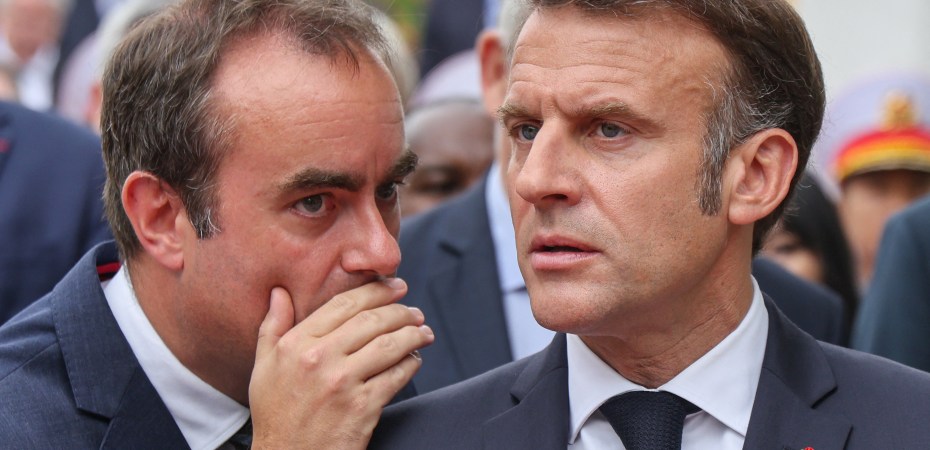
French President Emmanuel Macron has reappointed Sébastien Lecornu as prime minister just days after Lecornu’s unexpected resignation threw France’s government into turmoil.
The decision extends Lecornu’s extremely short term and shows the growing instability that has come to define Macron’s second presidency.
In France, the president is the top leader of the country. The president is elected by the people and handles big national issues like defense, foreign policy, and major decisions.

The prime minister is chosen by the president to run the government’s daily work. He or she manages laws, budgets, and what happens inside the country. But to keep his or her job, the prime minister needs support from the National Assembly, which is essentially France’s version of Congress.
In the past 21 months, France has had four prime ministers resign. This is mainly due to the fact that the National Assembly has been at a total deadlock, meaning that there is no consensus between rival parties.
Lecornu’s resignation came just hours after he presented his new cabinet, a lineup that largely retained ministers from previous governments. His appointment in early September had been viewed as an attempt by Macron to restore order and continuity after July’s snap elections, which were held earlier than usual and left parliament fractured and the government without a clear majority.

However, the new cabinet immediately drew criticism from both the opposition and members of Macron’s own alliance.
Lecornu’s government did not even last a full day. Within hours of announcing his cabinet, several political groups across the spectrum declared that they would vote against him in an expected confidence motion.
Facing the possibility of immediate defeat in parliament, Lecornu chose to resign. The move caused one of the shortest political tenures in French history.
“It’s unbelievable that he led a country for less than a day. Even though he got reappointed, it’s still an absolute joke,” stated Saint Paul’s senior Bobby Hanks.
Lecornu’s quick return to office shows just how divided French politics have become. Since President Macron lost his full control of the National Assembly in 2022, it has been much harder for the government to pass new laws. Without enough support, almost every big decision turns into a political fight.
Because of that, France has gone through several prime ministers in just a short time. Each one has faced the same problem of trying to lead a government that can’t agree on much. The constant arguing between parties has made it difficult for anyone to stay in power for long.
In France, the president has a lot of power, but he still needs the National Assembly to agree on most laws. If the Assembly refuses to cooperate, the prime minister often ends up stuck in the middle. When that happens, the government can stop working properly, and the prime minister might have to step down.
Many people blame President Macron for the recent chaos. They say he makes too many decisions on his own and doesn’t listen enough to other parties. Others defend him, saying he’s doing his best to keep the government running in a time when no one can agree on anything.
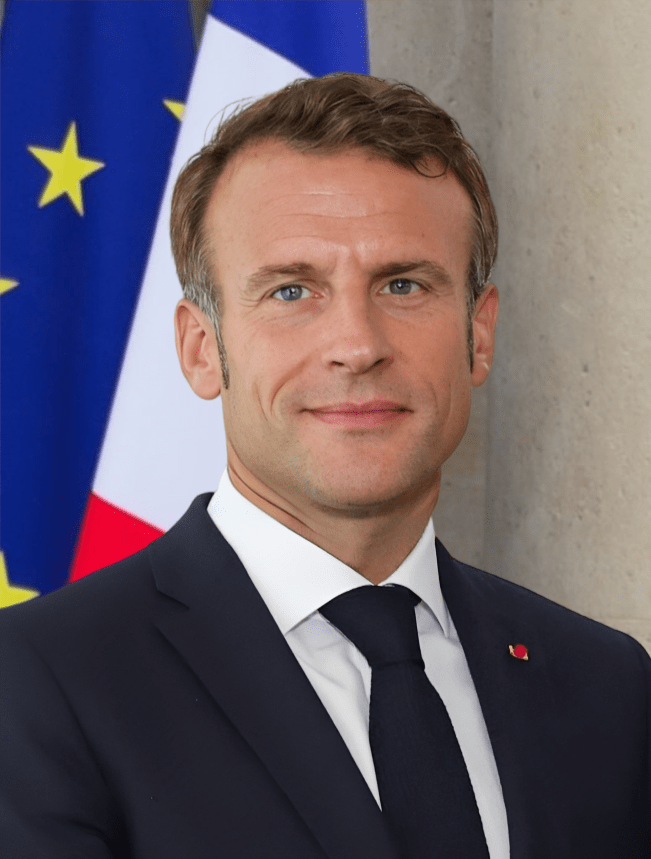
By bringing Lecornu back, Macron is trying to show that the government can still function. Reappointing him saves time and avoids another long search for a new leader. It also shows that Macron doesn’t want to risk new elections, which could further hurt his party.
Lecornu now faces a very tough job. He has to earn back the trust of parliament, come up with a plan everyone can agree on, and prove that he can keep the government stable. If he fails, France could face yet another change in leadership before the year ends.
The country’s political troubles are also slowing down work on important issues like the economy, climate change, and France’s role in the European Union. Many people worry that all the arguing is distracting the government from solving real problems.
Recent polls show that French citizens are getting tired of the political drama. Fewer people say they trust the president or parliament to make progress. Some think France’s political system itself needs big changes so that governments can last longer and work more smoothly.
As Lecornu returns to office, he immediately faces new tests. Parliament will soon debate the national budget, and several opposition parties have already said they won’t make it easy for him. If Lecornu can’t build support, he could face another vote of no confidence and another possible resignation.
“It’s probably just going to happen again. If they couldn’t agree the first time, I don’t see how he’ll be there long,” Saint Paul’s senior Aidan McLain predicted.
For now, France is still stuck between uncertainty and hope.
Macron’s decision to bring back the same prime minister who just quit may calm things for a moment, but it also shows how few choices he really has left. Whether Lecornu can hold on this time will shape how both men are remembered when this turbulent chapter of French politics finally ends.
Featured Image Photo Credit: Ludovic Marin / AFP
 The Paper Wolf